
 Image 1 of 1
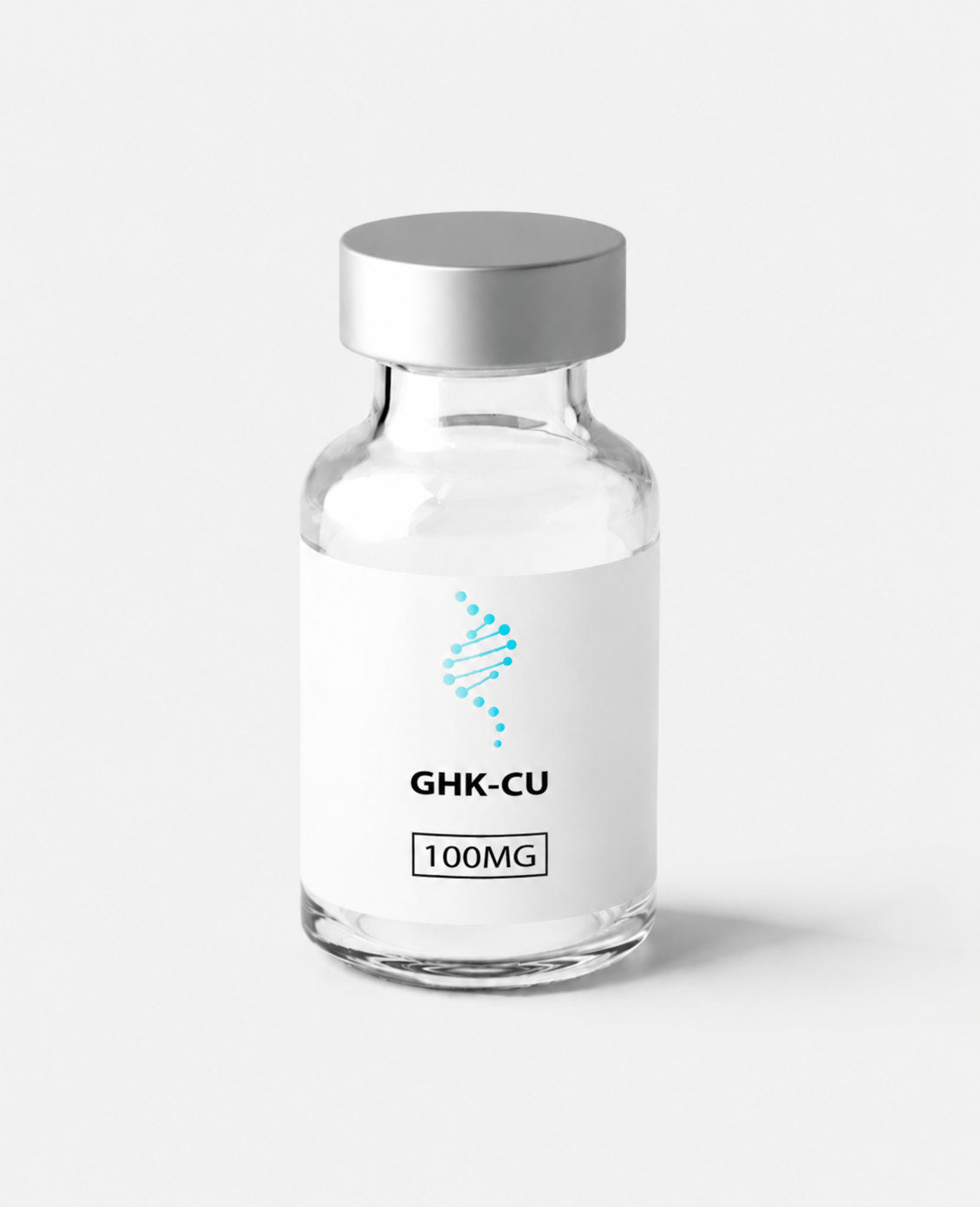
GHK-Cu (Glycyl-L-Histidyl-L-Lysine Copper) is a naturally occurring copper complex first isolated from human plasma in 1973. While AOD-9604 and CJC-1295 focus on metabolic and growth hormone pathways, GHK-Cu is the "gold standard" for tissue regeneration and gene modulation.
As we age, GHK-Cu levels in our blood drop significantly (by about 60% between ages 20 and 60), which is why it is widely used in anti-aging protocols to "reset" cells to a more youthful state.
Dermal Remodeling: It is most famous for its ability to stimulate collagen, elastin, and glycosaminoglycans (like hyaluronic acid). This tightens loose skin, improves elasticity, and reduces the depth of fine lines and wrinkles.
Wound Healing & Scars: GHK-Cu accelerates the body’s natural repair process by attracting immune cells to the site of an injury. It is unique because it promotes ordered collagen deposition, which helps prevent the formation of thick, raised scar tissue.
Hair Follicle Stimulation: In hair restoration, it is used to increase follicle size and extend the "anagen" (growth) phase of the hair cycle. It also helps improve the success rate of hair transplants by reducing inflammation in the scalp.
Gene Modulation: Research suggests GHK-Cu can influence the expression of over 4,000 human genes, essentially "flipping the switch" from inflammatory/degenerative states to regenerative ones.
Antioxidant & Anti-Inflammatory: It acts as a potent antioxidant by neutralizing free radicals and suppressing inflammatory cytokines (like TNF-alpha), making it a favorite for post-laser or post-chemical peel recovery.
Copper Transport: It acts as a chaperone, safely delivering copper—a vital mineral for enzyme function—to cells without the risk of copper toxicity often associated with unbound metal.
GHK-Cu (Glycyl-L-Histidyl-L-Lysine Copper) is a naturally occurring copper complex first isolated from human plasma in 1973. While AOD-9604 and CJC-1295 focus on metabolic and growth hormone pathways, GHK-Cu is the "gold standard" for tissue regeneration and gene modulation.
As we age, GHK-Cu levels in our blood drop significantly (by about 60% between ages 20 and 60), which is why it is widely used in anti-aging protocols to "reset" cells to a more youthful state.
Dermal Remodeling: It is most famous for its ability to stimulate collagen, elastin, and glycosaminoglycans (like hyaluronic acid). This tightens loose skin, improves elasticity, and reduces the depth of fine lines and wrinkles.
Wound Healing & Scars: GHK-Cu accelerates the body’s natural repair process by attracting immune cells to the site of an injury. It is unique because it promotes ordered collagen deposition, which helps prevent the formation of thick, raised scar tissue.
Hair Follicle Stimulation: In hair restoration, it is used to increase follicle size and extend the "anagen" (growth) phase of the hair cycle. It also helps improve the success rate of hair transplants by reducing inflammation in the scalp.
Gene Modulation: Research suggests GHK-Cu can influence the expression of over 4,000 human genes, essentially "flipping the switch" from inflammatory/degenerative states to regenerative ones.
Antioxidant & Anti-Inflammatory: It acts as a potent antioxidant by neutralizing free radicals and suppressing inflammatory cytokines (like TNF-alpha), making it a favorite for post-laser or post-chemical peel recovery.
Copper Transport: It acts as a chaperone, safely delivering copper—a vital mineral for enzyme function—to cells without the risk of copper toxicity often associated with unbound metal.