
 Image 1 of 1
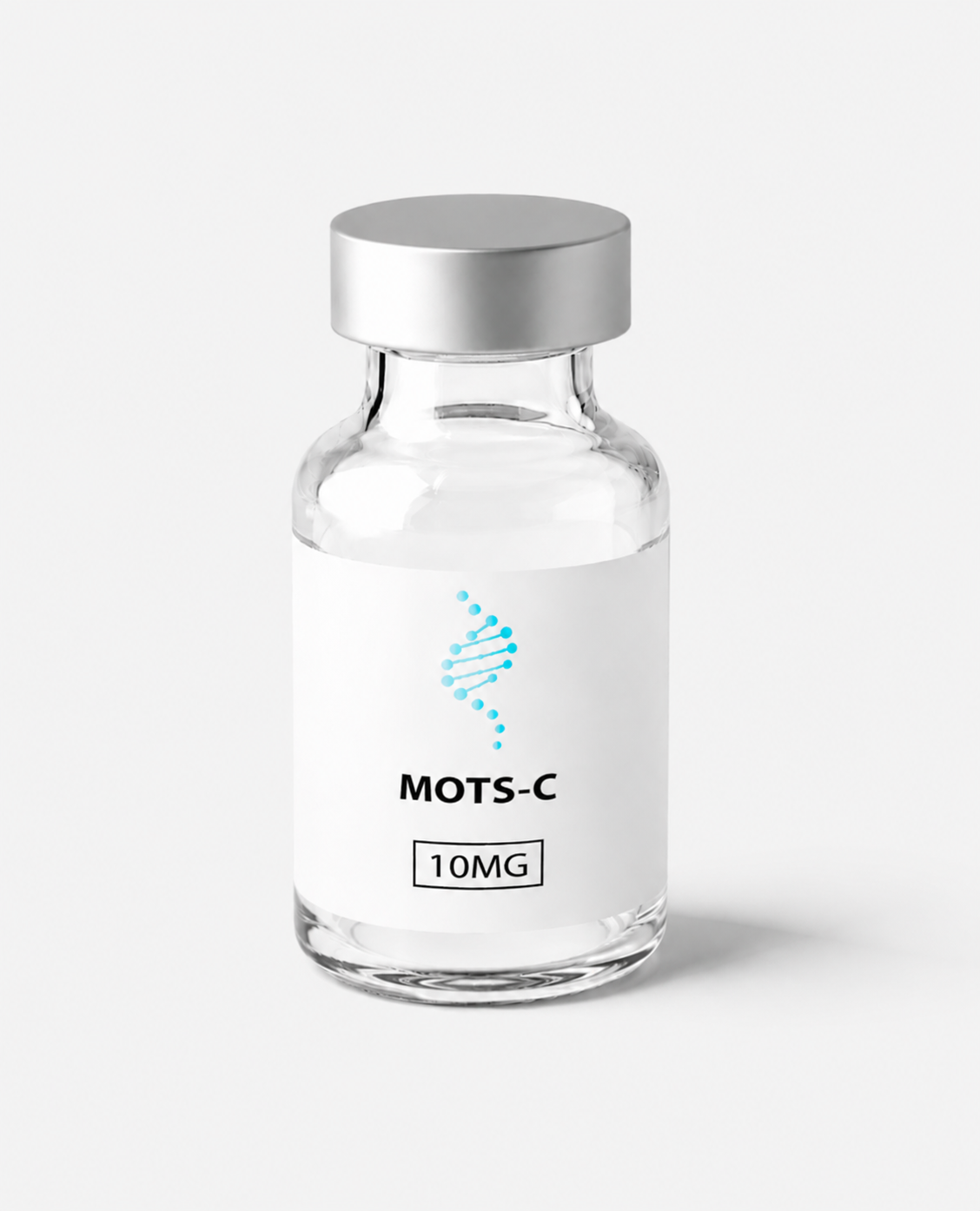
MOTS-c (Mitochondrial ORF of the 12S rRNA Type-c) is a unique, 16-amino acid peptide encoded not in the cell's nucleus, but within the mitochondrial DNA. It is often described as an "exercise mimetic" because it signals the body to respond as if it has just undergone intense physical activity.
Exercise Mimetic: MOTS-c acts as a "motion simulator." It activates the AMPK pathway (the master metabolic switch), which increases glucose uptake in skeletal muscle and fatty acid oxidation, effectively mimicking the metabolic benefits of exercise.
Metabolic Flexibility: It teaches the body to switch more efficiently between burning carbohydrates and fats for fuel. This helps resolve "metabolic gridlock" and is highly effective for breaking weight-loss plateaus.
Insulin Sensitizer: Research compares its mechanism to the diabetes drug Metformin. It significantly improves insulin sensitivity, helping the body manage blood sugar levels and reducing the risk of type 2 diabetes.
Mitochondrial-Nuclear Communication: MOTS-c is one of the few molecules that can travel from the mitochondria to the nucleus to "talk" to your genes. It tells the nucleus to activate stress-response and antioxidant genes, which protects cells from age-related damage.
Physical Performance & Stamina: In studies, MOTS-c has been shown to significantly increase running capacity and physical endurance in both young and old subjects by optimizing how muscles use energy.
Osteoporosis Prevention: Emerging research suggests MOTS-c promotes the growth of osteoblasts (bone-forming cells), helping to maintain bone density and prevent bone loss, particularly in post-menopausal contexts.
Longevity & Healthspan: Because it "rejuvenates" mitochondrial function—which naturally declines as we age—it is a cornerstone of advanced anti-aging protocols aimed at maintaining muscle mass and preventing frailty.
MOTS-c (Mitochondrial ORF of the 12S rRNA Type-c) is a unique, 16-amino acid peptide encoded not in the cell's nucleus, but within the mitochondrial DNA. It is often described as an "exercise mimetic" because it signals the body to respond as if it has just undergone intense physical activity.
Exercise Mimetic: MOTS-c acts as a "motion simulator." It activates the AMPK pathway (the master metabolic switch), which increases glucose uptake in skeletal muscle and fatty acid oxidation, effectively mimicking the metabolic benefits of exercise.
Metabolic Flexibility: It teaches the body to switch more efficiently between burning carbohydrates and fats for fuel. This helps resolve "metabolic gridlock" and is highly effective for breaking weight-loss plateaus.
Insulin Sensitizer: Research compares its mechanism to the diabetes drug Metformin. It significantly improves insulin sensitivity, helping the body manage blood sugar levels and reducing the risk of type 2 diabetes.
Mitochondrial-Nuclear Communication: MOTS-c is one of the few molecules that can travel from the mitochondria to the nucleus to "talk" to your genes. It tells the nucleus to activate stress-response and antioxidant genes, which protects cells from age-related damage.
Physical Performance & Stamina: In studies, MOTS-c has been shown to significantly increase running capacity and physical endurance in both young and old subjects by optimizing how muscles use energy.
Osteoporosis Prevention: Emerging research suggests MOTS-c promotes the growth of osteoblasts (bone-forming cells), helping to maintain bone density and prevent bone loss, particularly in post-menopausal contexts.
Longevity & Healthspan: Because it "rejuvenates" mitochondrial function—which naturally declines as we age—it is a cornerstone of advanced anti-aging protocols aimed at maintaining muscle mass and preventing frailty.