
 Image 1 of 1
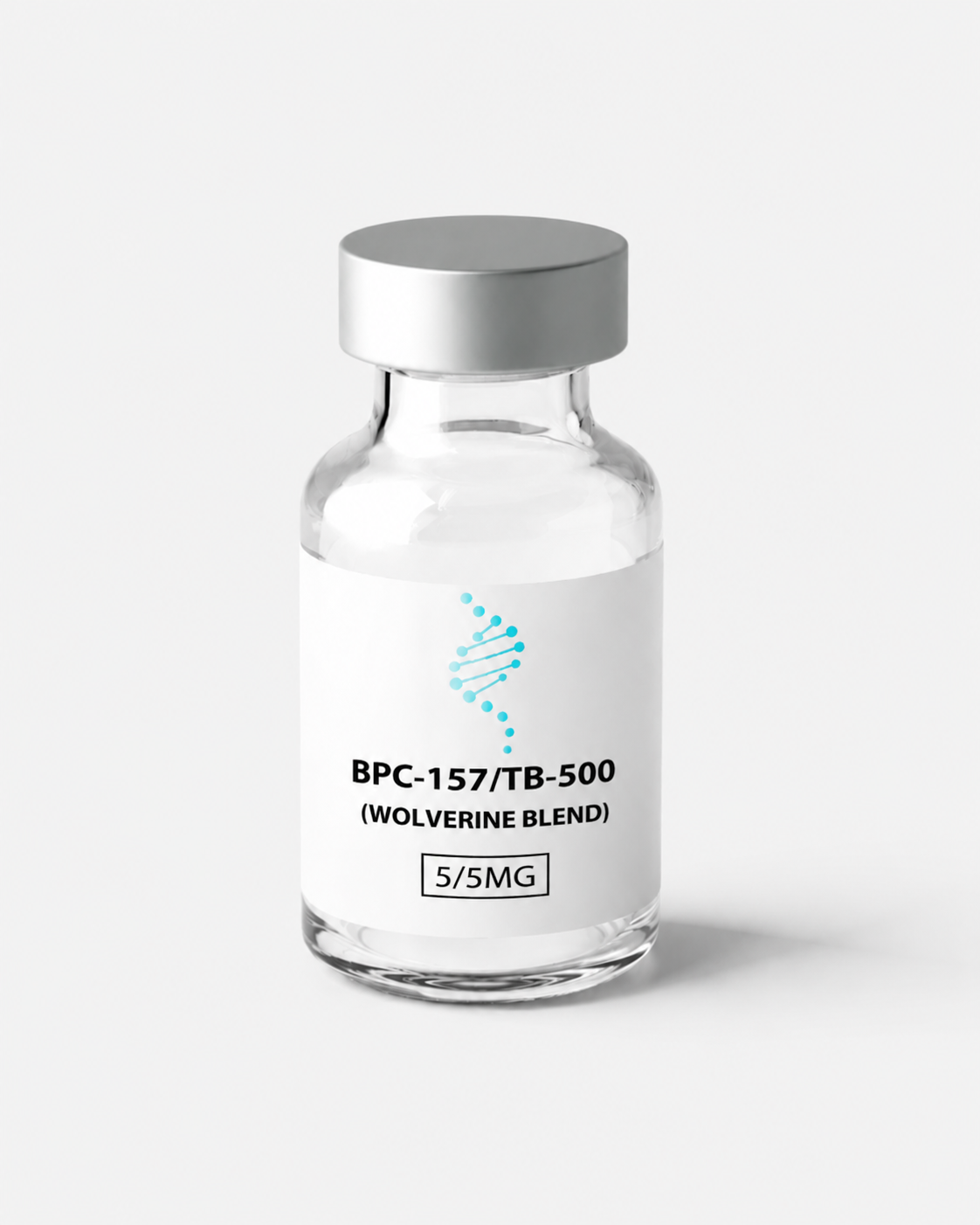
The Wolverine Stack is the most renowned "healing stack" in regenerative medicine. It pairs BPC-157, which acts as a localized repair signal, with TB-500, which acts as a systemic cellular mobilizer. Together, they accelerate the repair of tissues that traditionally receive very little blood flow (the "white zones" of tendons and ligaments).
Synergistic Angiogenesis (Dual-Path Blood Flow) While both peptides promote new blood vessel growth, they use different pathways. BPC-157 modulates VEGF (Vascular Endothelial Growth Factor) to build the "infrastructure," while TB-500 increases Actin, a protein that allows cells to move and build new pathways. This ensures nutrients reach the injury site faster than the body could manage on its own.
Actin-Mediated Cell Migration TB-500’s standout feature is its ability to upregulate actin, the cellular "motor." This allows repair cells (fibroblasts and myoblasts) to physically travel longer distances to the site of an injury. While BPC-157 stabilizes the injury site, TB-500 "calls in the reinforcements" from surrounding tissues.
Anti-Fibrotic Effects (Scar Tissue Prevention) One of the biggest hurdles in recovery is the formation of brittle, disorganized scar tissue. TB-500 is specifically known for its ability to reduce fibrosis. It helps ensure that new collagen fibers are laid down in an organized, flexible manner, preserving the original range of motion and reducing the risk of re-injury.
Muscle and Flexibility Enhancement Unlike BPC-157, which focuses heavily on the gut and connective tissue, TB-500 has a high affinity for skeletal muscle. It is often used to treat muscle tears (strains) and can significantly reduce the "stiffness" associated with chronic inflammation, leading to improved overall flexibility during rehabilitation.
Systemic vs. Local Synergy BPC-157 is exceptionally potent at the specific site of administration and is highly stable (oral or injectable). TB-500 is a smaller, more "slippery" molecule that travels through the entire system easily. This combination provides a "garrison" effect: BPC-157 guards and repairs the specific wound, while TB-500 provides a body-wide regenerative boost.
Neurological & Cardiac Support Emerging data on the stack suggests benefits beyond the gym. TB-500 has been studied for its role in repairing cardiac tissue after injury and protecting neurons. When paired with the neuroprotective qualities of BPC-157, the stack is increasingly used by those recovering from systemic inflammatory events or traumatic injuries.
The Wolverine Stack is the most renowned "healing stack" in regenerative medicine. It pairs BPC-157, which acts as a localized repair signal, with TB-500, which acts as a systemic cellular mobilizer. Together, they accelerate the repair of tissues that traditionally receive very little blood flow (the "white zones" of tendons and ligaments).
Synergistic Angiogenesis (Dual-Path Blood Flow) While both peptides promote new blood vessel growth, they use different pathways. BPC-157 modulates VEGF (Vascular Endothelial Growth Factor) to build the "infrastructure," while TB-500 increases Actin, a protein that allows cells to move and build new pathways. This ensures nutrients reach the injury site faster than the body could manage on its own.
Actin-Mediated Cell Migration TB-500’s standout feature is its ability to upregulate actin, the cellular "motor." This allows repair cells (fibroblasts and myoblasts) to physically travel longer distances to the site of an injury. While BPC-157 stabilizes the injury site, TB-500 "calls in the reinforcements" from surrounding tissues.
Anti-Fibrotic Effects (Scar Tissue Prevention) One of the biggest hurdles in recovery is the formation of brittle, disorganized scar tissue. TB-500 is specifically known for its ability to reduce fibrosis. It helps ensure that new collagen fibers are laid down in an organized, flexible manner, preserving the original range of motion and reducing the risk of re-injury.
Muscle and Flexibility Enhancement Unlike BPC-157, which focuses heavily on the gut and connective tissue, TB-500 has a high affinity for skeletal muscle. It is often used to treat muscle tears (strains) and can significantly reduce the "stiffness" associated with chronic inflammation, leading to improved overall flexibility during rehabilitation.
Systemic vs. Local Synergy BPC-157 is exceptionally potent at the specific site of administration and is highly stable (oral or injectable). TB-500 is a smaller, more "slippery" molecule that travels through the entire system easily. This combination provides a "garrison" effect: BPC-157 guards and repairs the specific wound, while TB-500 provides a body-wide regenerative boost.
Neurological & Cardiac Support Emerging data on the stack suggests benefits beyond the gym. TB-500 has been studied for its role in repairing cardiac tissue after injury and protecting neurons. When paired with the neuroprotective qualities of BPC-157, the stack is increasingly used by those recovering from systemic inflammatory events or traumatic injuries.